Part II: Designing HVHZ-Compliant Structural Glass Systems
Achieving Jumbo Transparency in the Florida Market
Florida’s coastline presents one of the most demanding environments for architectural design in the world. High-Velocity Hurricane Zones (HVHZ) demand uncompromising safety, strictly governed by Florida Product Approval (FPA) and Miami-Dade Notice of Acceptance (NOA) requirements. For architects and general contractors, the challenge is clear: how to achieve breathtaking, expansive transparency without sacrificing structural integrity or compliance.
At Sentech Architectural Systems, we know that bridging the gap between aesthetics and rigorous code demands requires more than just high-quality glass. It requires highly specialized, early-stage engineering anchored on existing NOA approved systems.
The Power of the Design: Why Early Engineering Matters
When designing for hurricane loads, leaving the structural glazing details to the later phases of a project can lead to budget overruns, change orders, schedule delays, and compromised aesthetics. Engaging an engineering-focused partner like SENTECH from the conceptual phase ensures the architectural vision is met and budget constraints are incorporated into the selected façade solution.
Architect’s vision of seamless, light-filled spaces that maximize transparency and are devoid of visual clutter from heavy framing, can be effectively achieved by leveraging SENTECH’s deep expertise in advanced structural glass design and missile impact testing. High-performance impact systems require careful engineering to limit deflection and prevent connection failures under dynamic loads. Collaborating early in the design phase is crucial to identifying potential clash points, load limitations, and field coordination challenges before they become costly site issues.
SENTECH’s advanced engineering knowledge, parametric modeling capabilities, breadth of installation experience, and precision manufacturing systems, ensure that complex structural glass systems integrate seamlessly with the primary building structure to reduce installation risks.
In the highly regulated world of FLPA and NOA-approved glazing, late-stage redesigns are exceptionally expensive. Early engagement enables teams to generate highly accurate Rough Order of Magnitude (ROM) budgets during the schematic phases. Ultimately, this proactive problem-solving identifies opportunities to optimize the façade and protect the project budget without sacrificing safety or style.
FAQs
What is the tallest single-span hurricane-impact structural glass system available?
The tallest single-span Florida-approved hurricane-impact facade on the market is Sentech’s VetraFin Impact system. It supports single-span glass face panels up to 28 feet in height and 10 feet in width, providing transparency for High-Velocity Hurricane Zones (HVHZ) without the need for horizontal intermediate metal framing.
How do glass fin systems meet Miami-Dade NOA and HVHZ structural requirements?
Glass fin systems meet strict HVHZ and Miami-Dade Notice of Acceptance (NOA) standards by replacing traditional heavy metal mullions with high-strength structural steel or glass fins. Sentech’s system relies on the bending strength of laminated glass, advanced interlayer technology, and hidden structural silicone connections to secure jumbo glass panels while resisting extreme positive and negative wind pressures.
Why is early engineering collaboration crucial for Florida Product Approved (FPA) glazing?
Early design and engineering collaboration is critical because late-stage redesigns in highly regulated Florida markets are incredibly expensive. Engaging an engineering partner early allows for the creation of accurate Rough Order of Magnitude (ROM) budgets during schematic phases, the identification of structural load limitations, and the resolution of clash points before manufacturing.
What are the typical applications for jumbo structural glass systems in hurricane zones?
Jumbo impact-resistant structural glass systems are most frequently utilized in high-end commercial projects, including specialty structural glass facades, lobby entrances, glass fin walls, and clear-span cable net structures where maximizing natural light and safety are simultaneous priorities.
How does Sentech ensure glass safety and post-breakage redundancy?
Sentech’s engineering team utilizes advanced energy models to predict glass breakage behavior prior to physical testing. The systems are designed for redundant structural behavior, optimizing post-breakage performance to ensure the building envelope remains secure and sealed even under maximum environmental stress.
Find out more about Sentech’s high performance impact systems on our Products page!
- Block 185 photo credit: Jason O’Rear
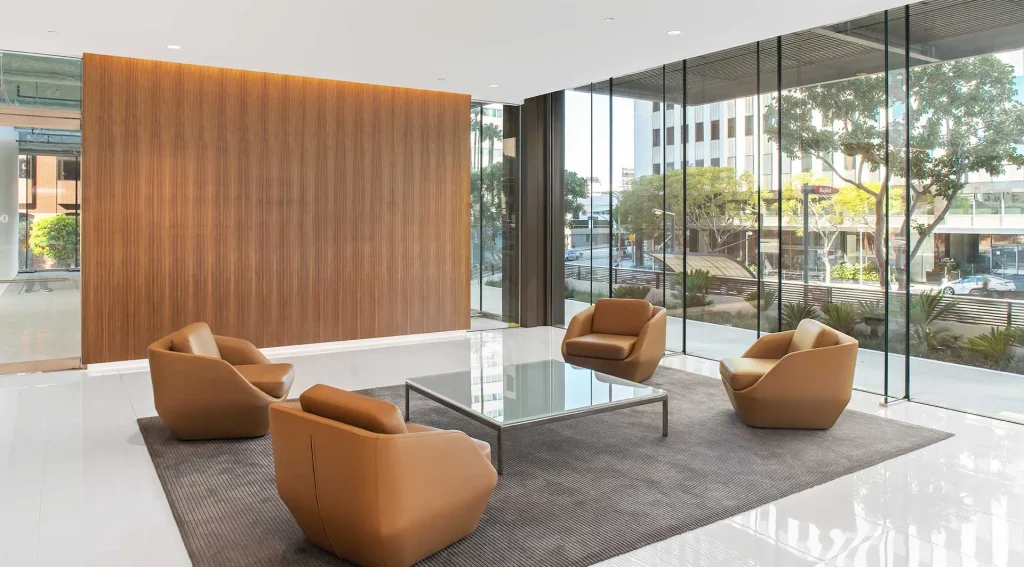
- 10880 Wilshire photo credit: Jun Tang
Related News
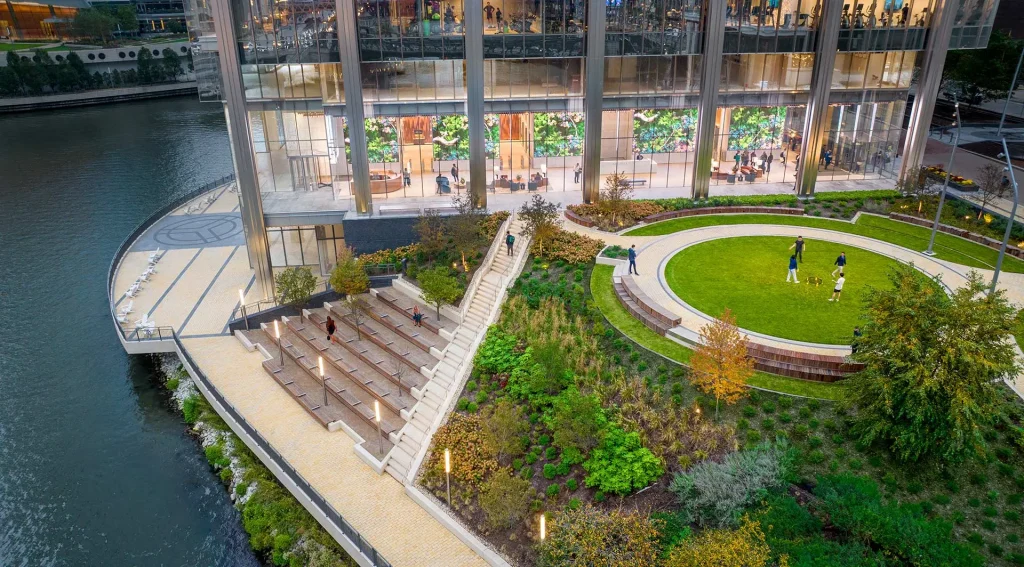
Project Feature: Salesforce Tower
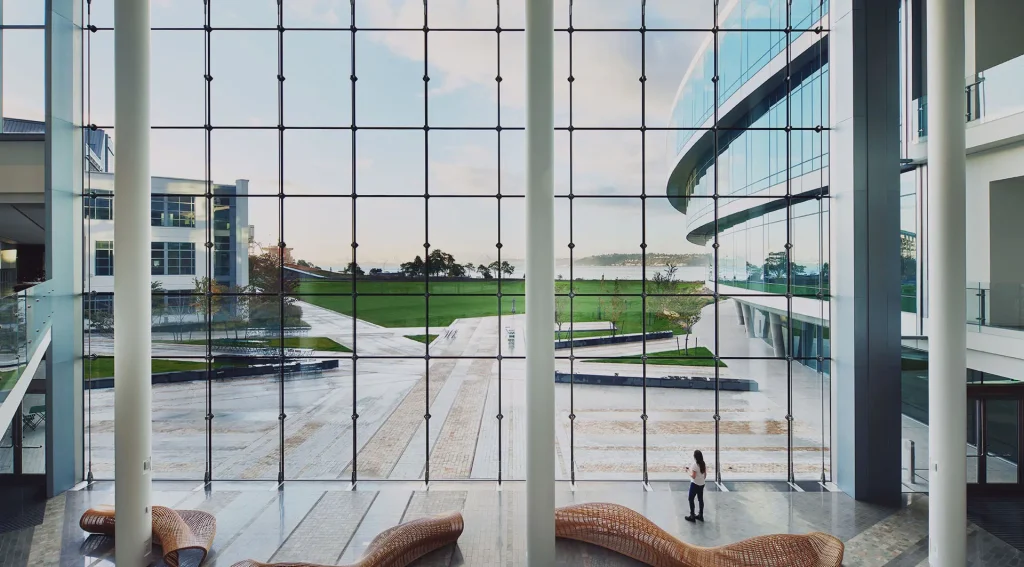
20 Years of Transparency
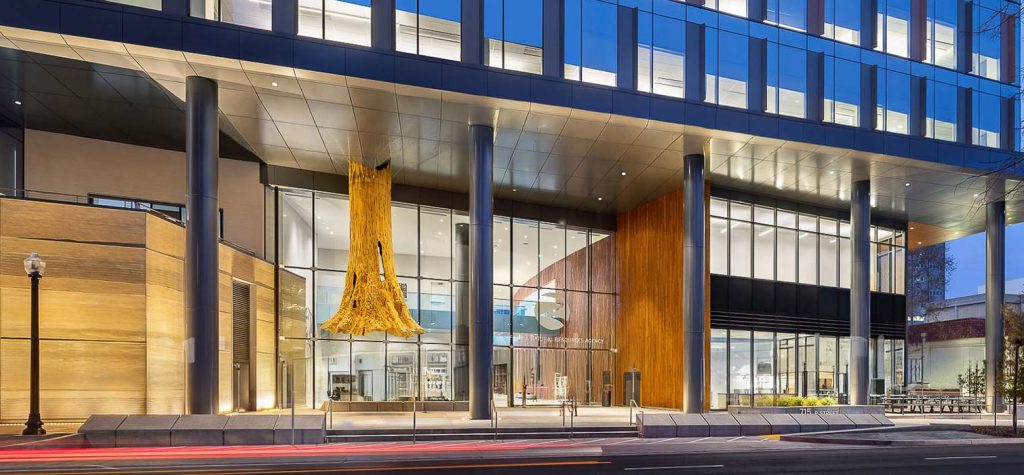
Project Feature: California Natural Resources Headquarters